


Bevin Cohen is a writer, herbalist, heirloom seed historian, and self-professed 'bean nerd.' With his wife, Heather, he operates Small House Farm in Sanford, Michigan. Heather and Bevin have also helped develop a thriving network of seed libraries in their home state.
Bevin's exuberant approach to saving seeds is simple, practical, and inspiring.
"Webster's dictionary would define a seed as 'the fertilized and ripened ovule flowering plant capable of germination in order to produce a new plant,'" Bevin says. "But as gardeners and seed savers, we know that seeds are much more than this.”
Seeds, he says, are our guarantee for the future, representing the source of food we need. They are also our connection to the past.
“Imagine, if you will, on every seed are the invisible fingerprints of the countless generations of people that have grown. and saved those seeds before us, passed down from hand to hand for generations. For 10,000 years since the dawn of agriculture, people have been saving and sharing their seeds," Bevin says.
"Seeds are in everything around us. Take the Almond Joy candy bar -- it's something we see every place that we go, right? Gas stations, party stores, convenience stores, grocery stores, Almond Joy candy bars are in every single one of them.
“And what are the three main ingredients of the Almond Joy Candy bar? Chocolate, coconut and almonds,” Bevin says. “So, the Almond Joy candy bar, this mundane everyday object, is 95% seed. Without seed, it simply would not exist.
“Without seeds, we simply would not exist. So although Webster's Dictionary is certainly accurate with its definition, we know seeds are so much more than that," Bevin says.
Watch as Bevin separates the seeds from the husks (chaff) with the simplest of techniques.
Seed Saving Essentials
If you garden at home, chances are excellent that you already have everything you need for seed saving. It's easy, and it is something all of us can do, Bevin says.
Here is a list of basic supplies:
- Harvest baskets
- Knives and scoops
- Yarns and labels
- Screens
- Drying racks
- Paper plates
- Portable fan
- Hose and running water
- Jars and buckets
- Storage containers
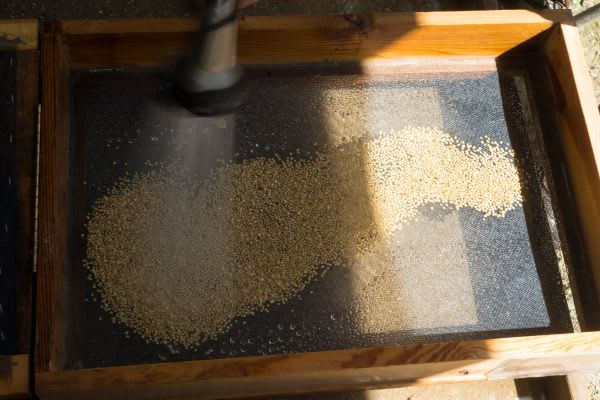
Processing tomato seeds using a screen box.
"People have been doing it for 10,000 years. Not scholars and scientists, but people just like you and me every day. A couple generations ago, there wasn't somebody like me going around and talking to people about saving seeds. That's ludicrous. Everybody saved seeds. If you wanted to eat food, you had to grow food. And if you want to grow food, you got to save seeds,” he says.
While we tend to think about saving seeds in the fall, being successful at it is a year-round process.
"I'm talking January when you're flipping through your Baker Creek catalog, just dreaming about these gardens to come. When you're starting your seeds, when you're transplanting your plants, we need to think about seeds the entire time to be successful seed savers in the fall,” Bevin says.
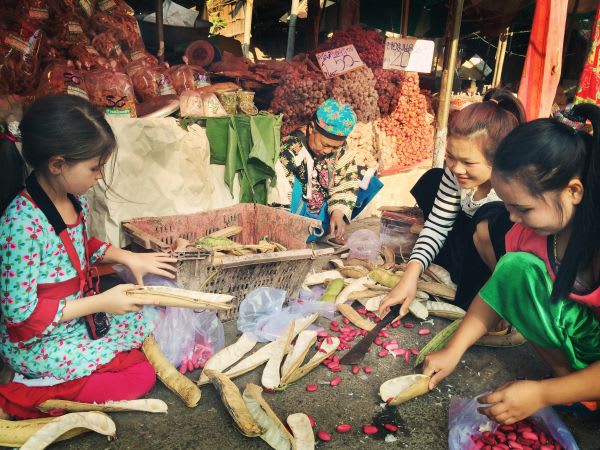
Sasha Gettle (pictured left) harvests bean seeds during a trip to Thailand in 2015.
Key Considerations for Seed Saving
If you are an experienced gardener, you're very familiar with how much space and time these plants are going to need for you to harvest them for eating. But very often, the time to maturity is different for saving seeds. Take lettuce for example. While most lettuce is ready to eat within about 55 days of sowing, Bevin noted that lettuce he planted in spring was just starting to flower in mid-October.
And if you're gardening in a small space, it takes quite a bit of planning and forethought for optimal use of space.
"We need to plan for seed saving in advance," Bevin says.
Cucumbers are another example. While we enjoy the fruit when its seeds are thin and translucent, they have to get "big, ugly, thick skinned, and bitter" before they're ready for seed harvest, he says.
Seed saving involves a few techniques. The most challenging thing for beginners is figuring out when to harvest the seeds, Bevin says.
“Nature tells us once we learn the cues,” Bevin says. “Saving seeds only involves about five techniques. The first one is when are the seeds ready? Think about a tomato. This is the best example, right? Tomatoes. Green. Then it turns red or yellow or orange, or stripy. The fruit changes color to let you know when the seeds are ready. Our cucumbers are going to do the same thing.”
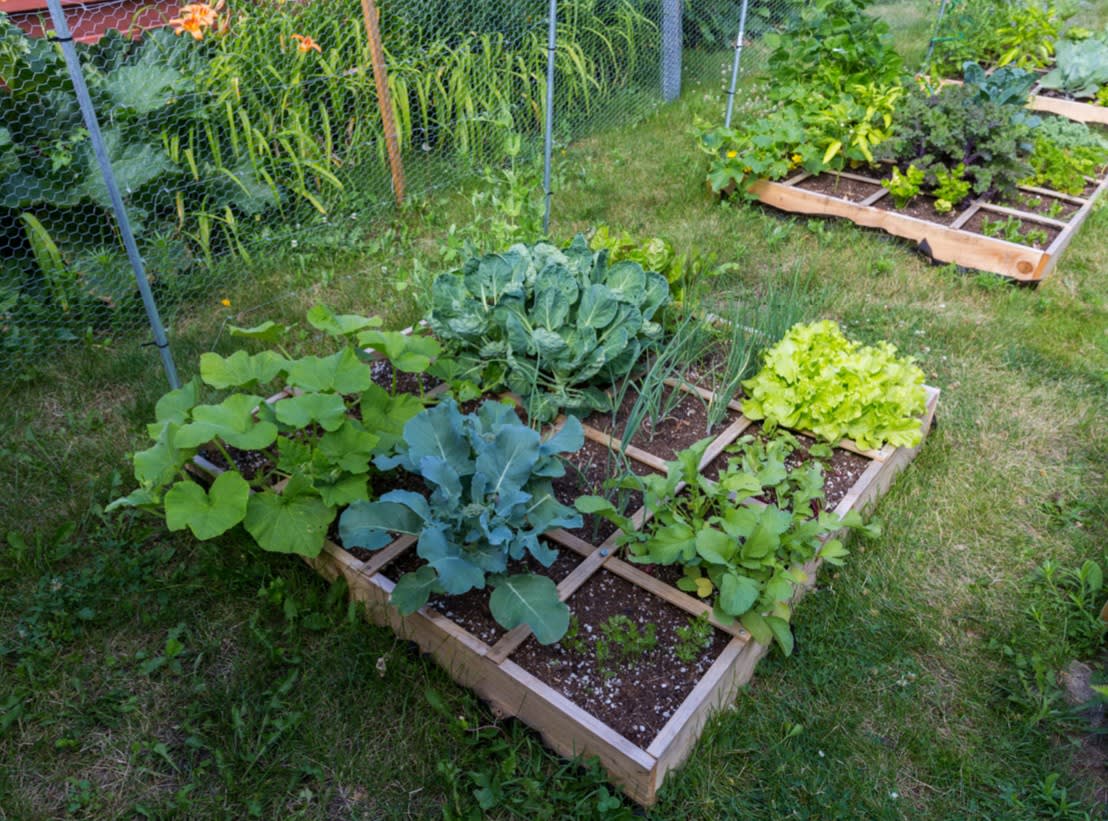
Planning is key, especially for gardeners with limited space.
Every plant in the plant kingdom exists for one reason, he says: To produce seeds.
“That's what it's trying to do. And the only reason that fruit exists in any form, in all of nature, is as a seed dispersal mechanism, so animals like me will collect the fruit and then disperse the seeds as we travel about. So as we come to understand that basic principle, then we know that when we allow our plants to go to seed, when we allow our fruits to mature, they're going to put all of their energy into those seeds, which means they're going to stop making baby fruit,” Bevin says.
If you stop deadheading flowers, for example, the plant then puts all its energy into making seeds.
Seed savers can either plant extra in anticipation of seed saving or just stop harvesting fruit at some point and “let nature take its course,” he says.
Most of the time, you don’t need a large number of fruits to yield enough seeds, with plenty left to share with family and neighbors.
"Seeds are exponential in the wild. Plants make an incredible amount of seed because not many of those seeds will survive,” Bevin says. “But in a cultivated situation, like a garden where we are gathering and caring for the seeds as they mature, most all of those seeds are going to survive, which means we get a ton of them, right? Lots and lots of seeds from very little work, very little effort,” he says.
Some Terms to Know
Open Pollinated
In its simplest definition, an open-pollinated crop, when left to pollinate openly with the plants around it, will produce fruits that contain seeds that are true to the maternal form,” Bevin says. “What I mean by this is you can predict what those seeds are going to grow, right? You can say Amish Paste tomato. That's one of my favorites. You get the tomato, you save the seeds from it, you grow it next year, Amish Paste tomatoes. It's easy to predict.”
Hybrid
A hybrid is created when we get two plants of the same species, cross-pollinated with each other to get that hybrid variety.
Saving the seeds of hybrid varieties can be tricky, he says. (Check out our YouTube video on what happens when you save hybrids.)
“When I save the seeds from an F1 hybrid, I plant them again next year, I get the F2, the second generation, and then that second generation has every potential genetic expression that could have come from the first initial cross. What does that mean? You can't predict what those seeds are going to grow. It could be like the mother plant, the father plant, the long-lost cousin. It could be better; it could be worse,” he says.
Sweet corn is a great example, he says.
“The gene that causes corn to be sweet is a recessive gene,” Bevin says. “So I if save seed from an F1 hybrid sweet corn, and I plant it next year, the likelihood that it produces sweet corn is about 20%. That's 80% odds I'm going to be very disappointed in my corn.”
Save yourself the headaches and only plant heirloom and open-pollinated varieties, he says.
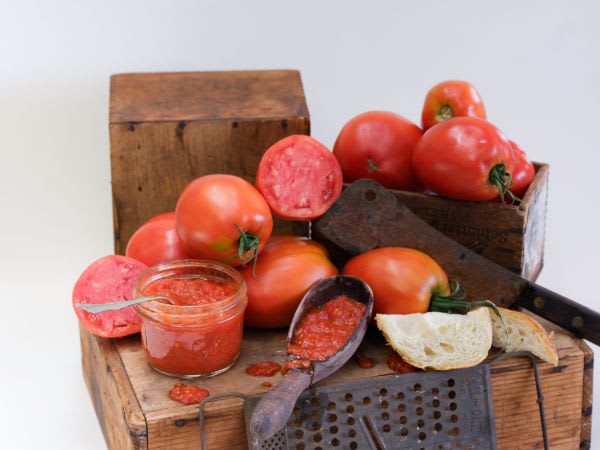
Bevin's favorite tomato -- the Amish Paste
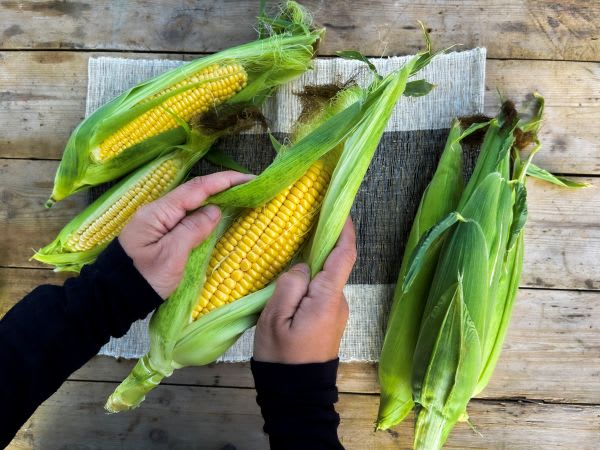
If you want to save corn seeds, go with open-pollinated or heirloom ones like Damaun KS.
Heirlooms
"All heirlooms are open pollinated. There are new open-pollinated varieties introduced every year. They're fantastic. You can grow them. You can save them. It's wonderful. But these heirlooms, man. If people have been saving and sharing these seeds for 50 years or more, which is the benchmark to become an heirloom, well, there's probably a good reason we'd want to save those seeds, too, right? It could be something delicious, could be something historical. It could be sentimental, I don't know.”
Annuals and Biennials
An annual crop will live its entire life cycle, flowers, fruits and seeds, the very first year you grow it in your garden. A biennial, on the other hand, needs to be overwintered, vernalized, and in that second year starts its reproductive cycle. Biennials are crops like beets and brassicas.
He encourages beginning seed savers to stick to annual crops.
“There are so many annual crops out there,” he says. “More than you’ll ever need.”
Pollination
Understanding the basics of pollination is also key for seed savers.
"When we're planning our gardens, we have to understand what's happening out there so we can plant in accordance with the pollination that's going to happen,” Bevin says.
"Simply put, many of our garden crops are self-pollinating. This means they have perfect flowers, right? They're bisexual or hermaphrodites. That's called perfect in nature. They have the male and female parts right on that same flower. [It is] completely self-contained, makes its own seeds with no outside input at all.
Other crops, on the other hand, have separate staminate and pistillate flowers, need wind or insects to move the pollen from here to over there to get your fruit to grow. This is important for us to understand if we want to avoid cross pollination in our garden,” he says.
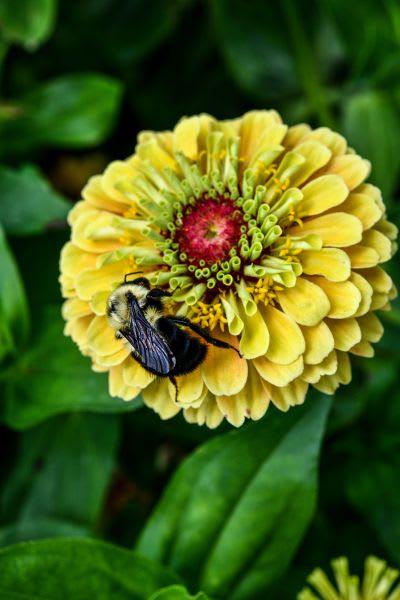
Bees adore zinnias such as this Queeny Lemon Peach.
Dry Seeds and Wet Seeds
Dry seeds are those in a dry environment when mature – think beans, corn, cowpeas, flowers, and herbs. Wet seeds are those in a moist environment – think tomatoes.
Seed Saving Basics for Common Crops
How do you know when a dry seed is ready to harvest for seed saving?
“They look like they're dead,” Bevin says. “They're brown and crispy, brown and crispy.”
Saving dry seeds is a two-step process of threshing and winnowing.
“Threshing simply means impacting the seed pod to release the seed, and winnowing is utilizing the wind to separate the seed from the chaff,” Bevin says.
Dry seeds are all collected and cleaned in the same basic way.
Lettuce
Lettuce seeds are easy to save, but they are easily wind dispersed if left too long. When the flower heads are dry and have developed a fluffy, dandelion-like appearance and the base of the flowers (sepals) have turned brown and crispy, pinch off the seed heads and place them in a paper bag labeled with the variety name and date of harvest. You can also harvest the entire flower stalk and place it upside in a large paper bag labeled with the variety name and date. In the spring, shake the paper bag and the seeds will separate from the flower head. To remove the fluff (aka ‘poofs’) from the seeds, position your hands over a container and rub the seed heads between your palms. To disperse the chaff, hold the seeds in your palms and give them a gentle puff of air.
Here's a quick video tutorial from Bevin on how to save lettuce seeds.
Tip: Consider bagging the seed heads of crops like lettuce before harvesting to prevent self-seeding and using row covers to prevent cross pollination.
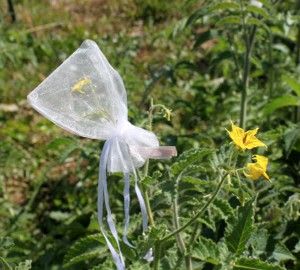
Bagging seeds prevents seeds from dispersing before harvest. (Photo by Heather Cohen.)
Cucumbers
Like lettuce, cucumbers are harvested for eating long before they are harvested for seed. Leave the fruit on the plants until it turns yellow or orange, and the skin has toughened. Cut the overripe cucumber in half lengthways, scoop out the seeds and place them into a jar. You’re going to ferment them. More on that in a minute.
Tomatoes
Tomatoes and cukes are examples of wet seeds, and the seeds have a gelatinous coating around them containing growth inhibitor chemicals that prevent them from spouting prematurely, Bevin says.
Fermenting the seeds before saving helps break down that coating.
Tomato seeds are ready to harvest when the fruit is ripe for eating. Cut the tomato in half across its equator (widest part) and squeeze the seeds into a jar. Add an equal amount of water and give the mixture a good stir, then loosely replace the lid and set it aside for three or four days, or until you see a layer of white scum across the top.
“That’s the mold,” Bevin says. “It's lactobacillus. It's kind of the same fermentation process that we use when we make kimchi, breaking down that coating on those seeds.”
"Once you see that mold, you're in business. Add some water to that jar, give it a good shake. All the stuff you don't want floats; all the good seeds will sink to the bottom. A Mason jar like this works fine at home. Sometimes on a larger scale, we'll use buckets or something like that,” he said.
Empty the mold, excess water, and unwanted materials (i.e. dud seeds and flotsam), carefully reserving the good seeds at the bottom of the jar. Turn them out onto a dry, absorbent material like a paper towel or coffee filter to dry, then pack them up into labeled dry containers for storage.
Here's a quick video tutorial from Bevin on saving tomato seeds.
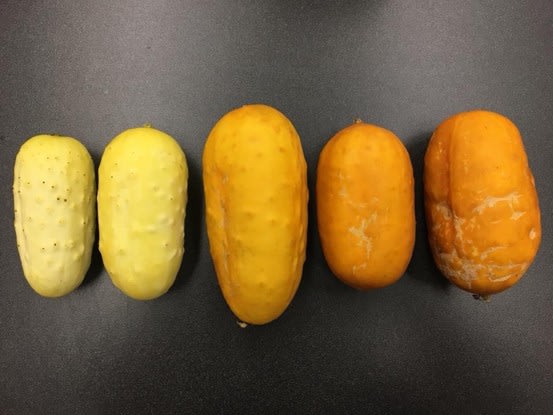
Boothby's Blonde cucumbers in various stages of maturity. (Photo by Heather Cohen)
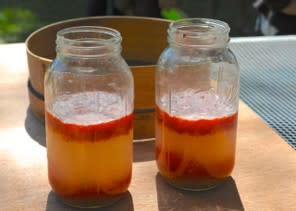
As part of the fermentation process, a layer of lactobacillus will form on the surface of the water. (Photo by Heather Cohen)
Labeling and Storage
Bevin says you don’t need to store seeds in the freezer, or even in an airtight container, if you’re saving them from one season to the next.
“An envelope is going to work perfectly fine. Coin envelopes, shoeboxes, as long as they are cool, dark, and dry, these seeds will wait for you to grow them,” he says.
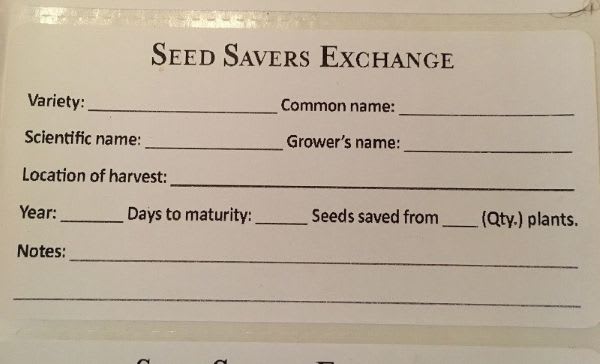
The best seed labels are those that contain as much information as possible: variety name, common name, scientific name, and the grower name, as well as the date were harvested.
"I don't know about you, but I can't remember 20 minutes ago, let alone what I grew last year, so the more information I put on the label, the better prepared I will be and the better prepared everyone I share my seeds with will be to succeed,” he says.
And remember: The best way to preserve varieties is to grow them, he says.
“The greatest seed bank, of course, is in the soil. Seeds don't do any good if you’re not growing them. Plant those seeds, let them grow. That's what they want to do.”
View Bevin's full talk on our YouTube channel.
Follow Bevin and Small House Farm on social media:


