


You could think of stock flowers – Matthiola incana – as cabbage’s glamorous cousin. We're not knocking cabbage -- or any of the other heroic and hardworking brassicas, but we’ve never heard it said that cabbage could induce swooning.
Stock had that reputation in 18th century England. Botanist Pietro Mattioli, for whom the intensely fragrant flower is named, thought it might even have medicinal properties (as a love potion).
Stock is native to the Mediterranean coast and still grows wild along seaside cliffs and stone walls. Its intoxicating clove-like scent earned it the nickname “gillyflower,” invoking the French vernacular word for cloves.
Englishman John Gerard and other herbalists obsessed over stock flowers in the 1500s, so smitten were they by the flowers’ incredible fragrance and beauty.
We get it! As a flower, stock has it all. It’s no wonder that horticulturists of the Renaissance and Baroque eras devoted themselves to developing double blooming stock varieties, in various colors.
A Brief History of the "Gillyflower"
Heirloom historian William Woys Weaver notes that "the great passion of Renaissance and Baroque horticulturalists lay not in the culinary merits of stocks but in the development of double flowers, which resemble double roses, even to the extent of similar colors."
Weaver goes on to say that breeding double flowers is a challenge, since double-flowering stocks produce sterile seed and thus seed must be selected from single-flowering parents.
"This sterility issue introduced a quirky science of evaluating seed pods to determine which produce doubles and which do not," Weaver wrote. "The general rule of thumb: the shorter the seed pod the more likely the seeds will produce doubles. Due to these breeding challenges and the specialized talents required to grow them, stock nurseries provided growers with high income since the flowers were so much in demand, even more so if the colors were unusual."
Thomas Jefferson introduced stock to America in 1771, when he had them imported to plant in his gardens at Monticello.
But perhaps nowhere more than Japan has Matthiola incana found a fervent and enduring fanbase. The flowers’ sturdy stalks, exquisite flowers, and branching habit make it a staple of ikebana, the Japanese art of flower arranging. Stock flowers made their way to Japan during the Edo period, in the early 17th century. At the time, Dejima Island, in the southern port of Nagasaki, was the only place in Japan open to sea trade, and only with the Portuguese.
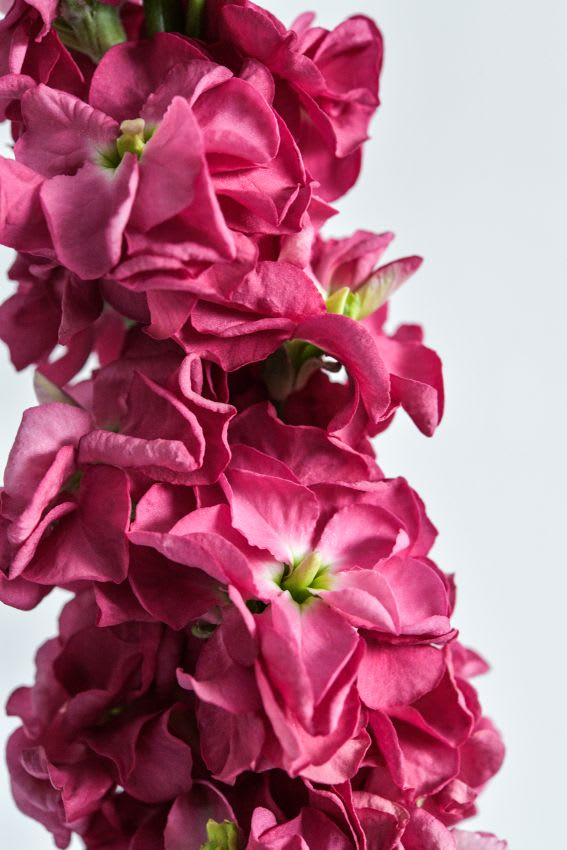
Market production of stock for cut flowers began in the early 20th century, spreading from Chiba Prefecture, southeast of Tokyo, to other coastal areas with similar mild weather. Given its ideal climate, Chiba has long been a center of stock production and breeding. Murakami Seed Company, from which we source several stunning stock varieties like Vintage Brown, developed several of their stocks at a research center in Chiba.
How to Grow Stock
Stock is a biennial in USDA zones 7 to 10, and can be a short-lived perennial, but in many places, including Japan, it’s grown as an annual.
In mild climates, you can plant stock flowers in the fall for spring blooms. Otherwise, you can plant them in spring. They’re easy to grow directly from seed, or you can start them indoors 6 to 8 weeks before the last frost date.
Make sure to pick a sunny spot in the garden.
They need at least 6 to 8 hours of direct sunlight daily.
At Baker Creek, we start all seedlings off in a soilless medium of peat moss, pine bark shavings, and coco coir with pre-charged organic nutrients (we recommend Royal Gold Propagation Mix) to stimulate root and shoot growth on the plants, said Farm Manager Jordan Chell.
Sow your seeds indoors eight to ten weeks before your last frost date for summer blooms.
Make sure the planting medium is light and fluffy. Plant two seeds per cell and always keep them moist but not sopping wet.
"When starting seeds, consistent moisture is the key to success," Jordan said.
Our garden team transplants the stock seedlings into beds that have been amended with alfalfa meal, comfrey leaf, bonemeal, worm castings, and gypsum to invigorate the microbes in the soil and help the plants get established.
Stock flowers prefer cool weather, and you may plant out the seedlings when they are about four to six weeks old. Plant the seedlings about five inches apart, and make sure to provide consistent moisture (but don't overwater!).

Stocks are susceptible to cabbage moths, Jordan says, so at Baker Creek we use a Bacillus thuringiensis (Bt) spray to combat them. Bt is a natural, organic biological insecticide that works by releasing toxins in the insect's gut, but is is safe for people and pets. Bt must be reapplied after rain.
Bacillus thuringiensis (Bt) spray is a natural, organic biological insecticide used to control caterpillars, worms, and certain larvae on fruits, vegetables, and ornamentals.
Stocks can grow up to three feet tall, and they like support. Plant them together so they can support each other, or do like we do and use plastic netting.
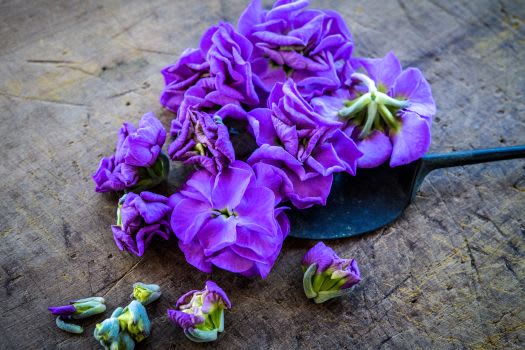
In about 90 to 120 days after transplant, you'll have armloads of beautiful, edible flowers with a radish flavor and seed pods that remind you of broccoli!
Stock grows two to three feet tall. Consider dwarf varieties such as Baby Rainbow and Baby Blue, spray types that grow to about a foot tall, if you're short on space.
Stock is beautiful, fragrant, and a gourmet culinary addition to salads and recipes, used as garnish, or just picked right off the plant for a surprising and spicy little treat!
Key Takeaways
- Stock (Matthiola incana) is a relative of cabbage and is native to the Mediterranean.
- Stock gained a firm foothold in Japan in the early 17th century, and today it is a center of production. Many of our stock varieties come from Murakami Seed Company in Japan.
- Stock prefers cool weather and rich, well-draining soil.
- In mild climates, you can plant stock in the fall for spring blooms.
- Stock is a biennial often grown as an annual.
About the Author
Michelle Johnson is a nationally award-winning writer and editor with decades of experience in broadcast, print, and digital media. Her favorite role at Baker Creek is that of seed historian, researching and documenting the remarkable stories of heirloom varieties and the people who have preserved them. For more stories of heirloom history, visit the Seed Stories playlist on Baker Creek's YouTube channel.


