


Though it most likely originated in China, mizuna (Brassica rapa var. nipposinica) is thoroughly Japanese. This peppery, toothsome green, whose name translates from Japanese as “water greens,” has been cultivated in Japan since antiquity.
It’s hard to overstate the significance of vegetables in traditional Japanese cuisine. Under Buddhist influence, Emperor Tenmu banned eating meat in the late 7th century. And though Emperor Seimu later permitted people to eat fish, it was mainly reserved for special occasions.
A Brief History of Mizuna
In 794, Emperor Kanmu moved Japan’s capital to a landlocked mountain village on the island of Honshu, to distance the imperial government from the Buddhist clergy in Nara. He named the new city Heian Kyo (which translates as “tranquility and peace capital”), or as we now know it, Kyoto. Kyoto’s climate and geography made it an ideal place to grow vegetables, and mizuna was a standard green on imperial banquet tables.
Kyoto’s distinctive traditional cuisine has its roots in the imperial court and Buddhist temples of the Heian period. It emphasizes using fresh, seasonal ingredients — almost always vegetarian — skillfully prepared and artfully presented.
But these heirloom ingredients faced a crisis in the 1970s, as Japanese tastes were shifting. So, Kyoto officials implemented a program to collect and save them from extinction. In 1989, Kyoto named these heirlooms as “Brand Kyo yasai,” a label attached to more than 30 varieties, including mizuna, Kamo eggplant, Manganji sweet peppers, and Kintoki red — or Kyoto Red — carrot.
Only varieties originating before the Meiji Restoration, which began in 1868, are eligible to be Kyo yasai. To earn the Brand Kyo Yasai label, they also must have been grown in Kyoto Prefecture under strict, environmentally friendly growing practices.
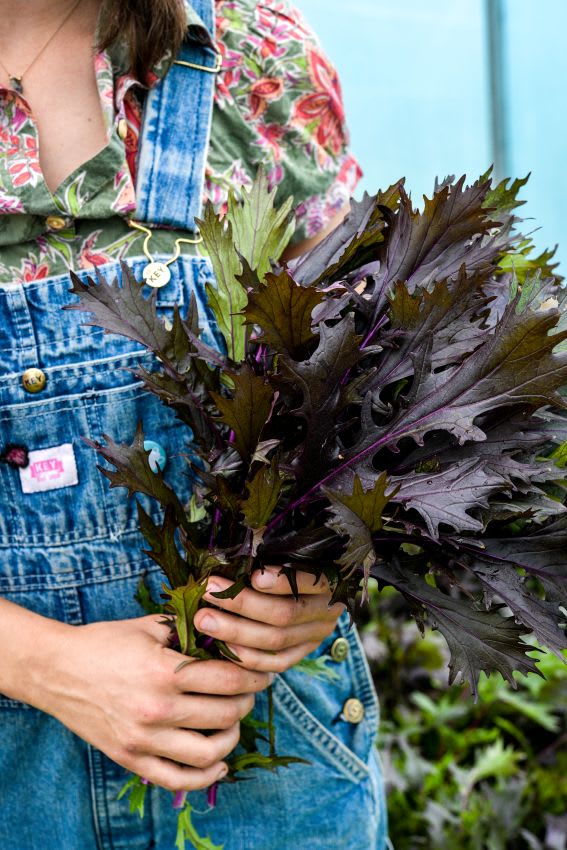
These heirloom vegetables of Kyoto are more colorful, flavorful — and nutritious — than regular vegetables.
There are over 16 different varieties of mizuna, from Benigoromo to Japanese Red Mustard, Early mizuna and Pinky Pop (new to Baker Creek customers in 2026). It’s used in stir fries, as a salad green, in nabemono (Japanese hot pot). As the Michelin Guide notes, it’s also “the star of a traditional social custom in Kyoto, where family and friends get together in winter to make mizuna rice and pickled mizuna.”
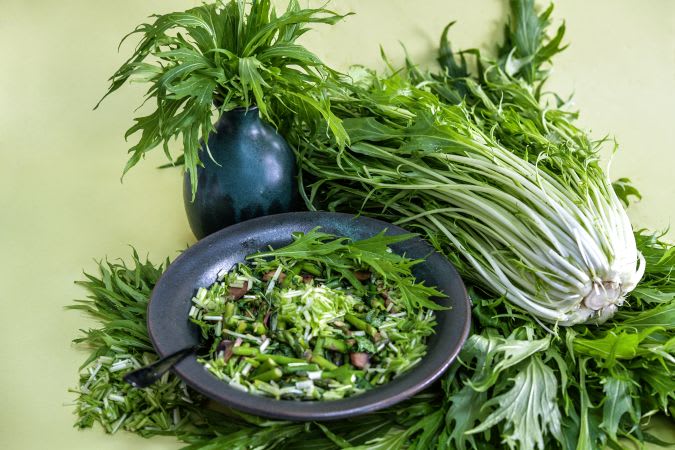
You might encounter this Brassica rapa nipposinica by its many other names: Japanese mustard greens, Spider mustard, Kyona, Qian Jing Shu Cai, and California peppergrass. By any name, though, mizuna is a supremely delicious and nutrient-rich leafy green. It’s high in vitamins A, C, and K; and folate and iron. It’s also a good source of B-complex and minerals like calcium, magnesium, potassium, and zinc.
How to Grow Mizuna
- Mizuna loves rich, composted soil, full sun and cool weather — and unlike many greens, it’s slow to bolt in warm weather.
- It germinates in soil as cold as 40 degrees Fahrenheit, making it a wonderful choice for early spring planting, as a fall crop — or for growing through the winter in a cold frame!
- There is no need to start mizuna indoors; it can be direct sown in spring or fall, when the weather is cooler, although starting seeds indoors will give you a head start on growing.
Key Takeaways
- Mizuna likely originated in China, but it is a signature leafy brassica in Japan.
- Mizuna was central to the Buddhist-influenced vegetarian culture in Kyoto.
- Fearing the loss of traditional vegetables, Kyoto officials implemented a program to collect and preserve varieties such as mizuna. "Brand Kyo Yasai" vegetables are grown exclusively in Kyoto Prefecture using strict, environmentally friendly growing practices.
- Mizuna loves rich, composted soil, full sun, and cool weather.
About the Author
Michelle Johnson is a nationally award-winning writer and editor with decades of experience in print, digital, and broadcast media.
She is also Baker Creek's resident 'seed historian,' digging into the back stories of celebrated and fascinating heirloom varieties from around the world.
Explore her Seed Stories video project on Baker Creek's YouTube channel.


