Celosia Seeds,
Variegated Cockscomb

4.519 ReviewsSKU #FL289 · 100 seeds
Price
Regular price $4.25
Regular price $0.00 Sale price $4.25
Save $-4.25
/

FREE U.S. SHIPPING, 2-YEAR GUARANTEE


Description

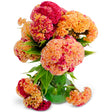
This is one of those flowers that makes people stop, grin, and lean in a little closer. An old variegated cockscomb once praised in 19th-century British publications as a floral curiosity, it has that rare blend of antique charm and pure visual mischief. Three-foot plants carry strange, wonderful combs in shifting tones, with every plant showing its own little color riff. The flowers can reach 4 to 6 inches across, and the whole planting feels like a Victorian flower bed wandered into Haight-Ashbury and never left. A true original.

Plant Details

Botanical Name
Celosia argentea var. cristata
Life Cycle
Annual
Sun Requirement
Full sun
Days to Germinate
14–21
Days to Maturity
85–100
Planting Depth
⅛ in.
Plant Spacing
10 in.
Ideal Temperature
60–95°F
Frost Hardy
No

Growing Guide

When to Grow

Direct sow this variegated cockscomb in place after your last frost, or start it indoors 4 to 6 weeks before the last frost date and transplant once frost has passed. Cover the seed no more than 1/8 inch, since light aids germination, and hold the soil at 75-80 degrees F for the 14 to 21 days it takes to sprout. Plants are not frost hardy and dislike cold, damp spring weather, so wait for settled warmth. From sowing, allow 85 to 100 days to maturity.

How to Sow and Plant

  • Seeds germinate in 14-21 days.
  • Surface sow seeds and cover with a layer of soil, making sure that seeds are well covered, as light inhibits germination.
  • Direct sow in place after last frost or start indoors 4-6 weeks before last frost.
  • Ideal germination temperature is 65-70 F.

How to Grow

  • Celosia can handle a wide range of soil and they appreciate full sun.
  • Space 9-12 inches apart. Plants range in height from dwarf to 3.5 feet tall depending on variety.
  • While the plants are considered drought-tolerant, keep them well-watered during germination and establishment as water stress can cause premature blooming.
  • Cut flower growers should pinch the main growing stem when plants reach 12 inches tall to encourage multiple branching versus single chunky stems.

PESTS/SPECIAL CONSIDERATIONS

  • Typically pest-free, though aphids may be a problem but can be treated with organic insecticidal soap.
  • This warm weather-loving plant may suffer from botrytis and rot if consistently exposed to temperatures cooler than 60 F and high humidity. Space plants farther apart to promote better air circulation and do not plant too early when the weather is still cold.

How to Save Seeds

  • Flowers are mostly self-pollinating, but insects can cross-pollinate different varieties. In order to prevent errant insect pollination, separate different varieties by 1/4 mile.
  • Save seeds when flower heads have turned brown; just place heads in a paper bag and shake seeds free.
  • Keep seeds in a cool, dry dark place.
  • Seeds remain viable for 3-5 years when stored properly.

FAQ

Will the variegation look the same on every Variegated Cockscomb plant?

No. Variegation varies a lot from plant to plant in this variety, so expect a range of the dueling tones across a planting.

How big do the plants and blooms get?

Alien-like combs sit atop three-foot-tall plants, and the lovely flowers measure 4 to 6 inches. Space plants 10 inches apart in full sun.

Can I save seed from it?

Yes. Celosia flowers are mostly self-pollinating, though insects can cross-pollinate different varieties, so separate varieties by 1/4 mile for pure seed. Harvest once the heads have turned brown, place them in a paper bag and shake the seeds free, then store them in a cool, dry, dark place, where they stay viable 3 to 5 years.
Customer reviews

4.5 / 5 19 Reviews

What gardeners are saying

  • Every bloom different: Peach, pink, red and yellow combs, no two alike.

  • Easy from seed: Sprinkle, water and they come up; low maintenance after.

  • Long-lasting blooms: Combs hold their color for weeks, still blooming into October.

  • Bees love them: Bees and other pollinators flock to the combs.

  • Heads up: Tall plants get top heavy; stake them before they flop.