Tomato Seeds,
Purple Calabash

3.815 ReviewsSKU #TP125 · 25 seeds
Price
Regular price $4.00
Regular price $0.00 Sale price $4.00
Save $-4
/

FREE U.S. SHIPPING, 2-YEAR GUARANTEE


Description

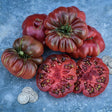
(Solanum lycopersicum). Stocky, ruffled fruit that provides a deliciously nuanced flavor experience. These medium-sized fruits reach about 3 inches across and 1.5 inches high, marbled pink to purple and chocolate in color; this color combination creates a complexity of flavor, with nice acidity but also smoky and sweet! This variety is known to be a good representation of how tomatoes in Mexico looked and tasted before European colonization.

Plant Details

Botanical Name
Solanum lycopersicum
Growth Habit
Indeterminate
Sun Requirement
6–8 hr.
Days to Germinate
7–14
Days to Maturity
85
Planting Depth
⅛ in.
Plant Spacing
24 in.
Ideal Temperature
75–95°F
Frost Hardy
No

Growing Guide

When to Grow

Start seeds indoors 6-10 weeks before the last expected frost date. Transplant seedlings outdoors after the danger of frost has passed. It’s best to check your local area’s frost dates for a specific planting time. In regions with shorter growing seasons, consider using row covers or planting in a greenhouse to extend the growing period.

How to Sow and Plant

  • As a tropical crop, tomatoes need plenty of warm weather and a long growing season. (Days-to-maturity figures count the time to first harvest from setting out transplants, which in turn take 6-8 weeks to grow before reaching transplant size.)
  • Avoid planting tomatoes too close to Brassica varieties such as cabbage, broccoli, and beets, as they may inhibit tomato growth.
  • In long-summer climates, they may be direct sown as soon as frost is past, but most gardeners start the tiny seeds indoors 6-8 weeks before the last spring frost date.
  • Either way, the seeds are just barely covered and germinate most rapidly in temperatures of 70 and above—80 degrees is best. (Use a heating mat indoors if necessary).
  • Seeds germinate in 7-14 days.
  • Once the sprouts appear, they require good light to grow well.
  • They may need to be fed once or twice to make good growth prior to transplanting outdoors, which happens after last frost.

How to Grow

  • Tomatoes tolerate a wide range of soil conditions but do best in deep, rich soil and in full sun.
  • Plants are usually staked but may be allowed to sprawl; spacing depends upon variety and which method is to be used.
  • Staked plants can be grown 18” apart in rows 3 or more feet apart; space 2-3 feet apart in rows 4 feet apart if the vines will be allowed to sprawl.
  • Determinate plants are usually smaller, requiring less space, and often need less support than indeterminate varieties. See above for a list of available determinate and semi-determinate varieties. Most varieties we sell are indeterminate.

PESTS/SPECIAL CONSIDERATIONS

  • Soil should be amended with plenty of compost; a little bone meal or other calcium source wards off blossom-end rot.
  • Hornworms can be controlled by daily hand picking; chickens love them. Hornworms are excellent camouflage artists, but their presence is marked by their excrement, which looks like small grenades.
  • It is also useful to keep tomato plants as far away from each other as practical in the garden.
  • If you find a hornworm that appears to have grains of white rice glued to its sides, it’s been parasitized, and that means the beneficial Braconid wasps have arrived to the rescue! Leave this hornworm in place as a nursery, and when the eggs hatch, the wasp larvae will eat the hornworm.
  • Pest control through “hiding” tomatoes in a polyculture planting can also be effective. Plant them with chili peppers, marigolds, borage, chives, nasturtiums, basil, calendula, sage, onions, and garlic.

How to Save Seeds

  • Most tomatoes are self-pollinating and don't frequently cross; in a garden setting, separating by 25 feet should prevent 99% of cross-pollination. Or you can bag and hand pollinate for 100% purity.
  • On a small scale, seeds may be scooped from the fruits and dried on a paper towel.
  • For larger quantities or cleaner seeds, fermentation for a few days is recommended.
  • Once dry, tomato seed can be stored in a cool, dry, dark place, and good seed retains viability for 5 years or more.

FAQ

What does Purple Calabash taste and look like?

The stocky, ruffled fruits reach about 3 inches across and 1.5 inches high, marbled pink to purple and chocolate. That color combination comes with a complexity of flavor, with nice acidity but also smoky and sweet notes. It is known to be a good representation of how tomatoes in Mexico looked and tasted before European colonization.

How should I water it?

Water consistently at the base of the plants to prevent foliage diseases, in fertile, well-draining soil with a pH between 6.0 and 6.8. Full sun for 6 to 8 hours a day suits it best.

What should I plant near it, and what should I keep away?

Hiding tomatoes in a polyculture planting can help with pests; try chili peppers, marigolds, borage, chives, nasturtiums, basil, calendula, sage, onions, and garlic. Avoid crowding tomatoes against brassicas such as cabbage, broccoli, and kale, as they may inhibit tomato growth.
Customer reviews

3.8 / 5 15 Reviews

What gardeners are saying

  • Deeply ribbed fruit: Heavily ribbed, odd-shaped fruit; no two look alike.

  • Rich, wine-like flavor: Complex, rich and wine-like; best fully ripe, even edging overripe.

  • Vigorous and prolific: Fast-growing plants that keep bearing when others give up.

  • Needs strong support: Long, thin vines and fast suckers; stake and tend them often.

  • Heads up: Some find it tart, not sweet; fruit keeps only days once picked.

More to grow!

See all Tomato Seeds