


Kohlrabi gets its name from the German words for “cabbage” and “turnip,” and this bulbous vegetable tastes a bit like a combination of the two.
A Brief History of Kohlrabi
For a time, the humble kohlrabi fell out of culinary favor and was relegated to the status of animal fodder. But food shortages spread across central and western Europe from the late 1930s through the end of World War II, and easy-to-grow, nutritious crops like rutabaga, Jerusalem artichoke, and kohlrabi reappeared on dinner tables out of necessity.
Kohlrabi’s cultivar group name “gongylodes” refers to a small red turnip known by its Kashmiri name “gongolou,” which is popular in central Asia.
Despite its shape, kohlrabi isn’t a root vegetable. Rather, it’s a member of the Brassicae oleracea family, and descended from wild cabbage. Around the 8th century, it’s likely that an astute monastery gardener in Germany noticed the short and swollen stems of some leaf cabbages and began saving seeds and selecting for that trait.
Kohlrabi (as “ravacaulos”) got its first mention in 812, when the Emperor Charlemagne published guidelines governing the management of the Holy Roman Empire’s properties. Article 70 of the Capitulaire de Villis, as it was called, was mainly devoted to farming and to crops that would promote better nutrition among the people of the empire. Monasteries were essentially tasked with being the “agricultural extension services” of the time. Each was to have three types of gardens: herbularius, the herb garden; hortus, the vegetable garden; and viridarium, the orchard.
Many contemporary monasteries have kept this tradition alive, and medieval gardens can be admired at Saint-Gall Monastery and Saint-George Abbey in Stein-am-Rhein, Switzerland. The Jardin Carolingien de Melle in the Deux-Sevres region of western France is a unique example of what a garden from the time of Charlemagne would look like.
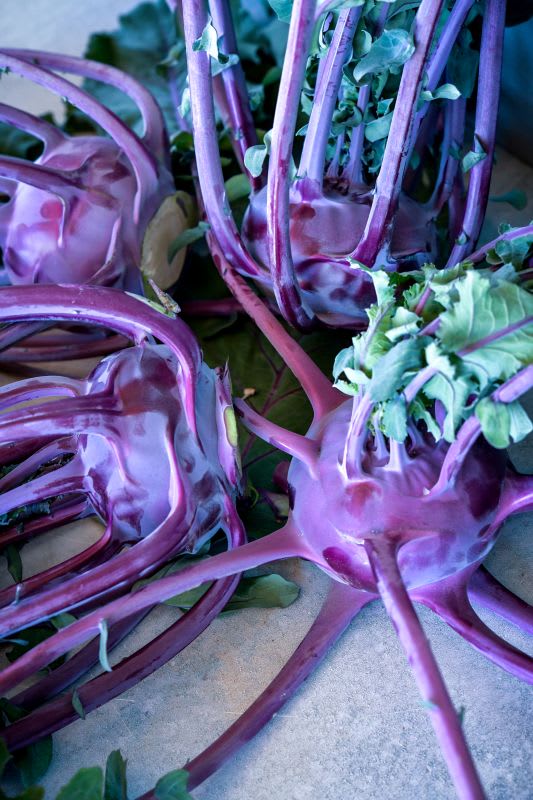
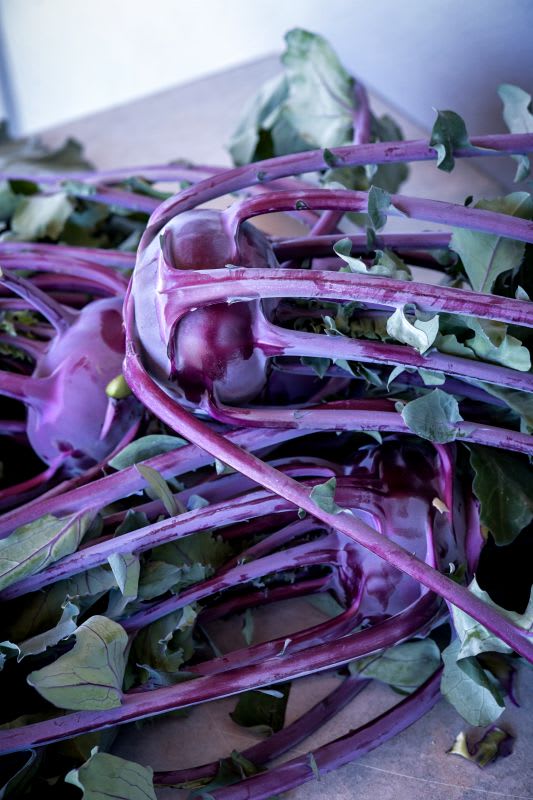
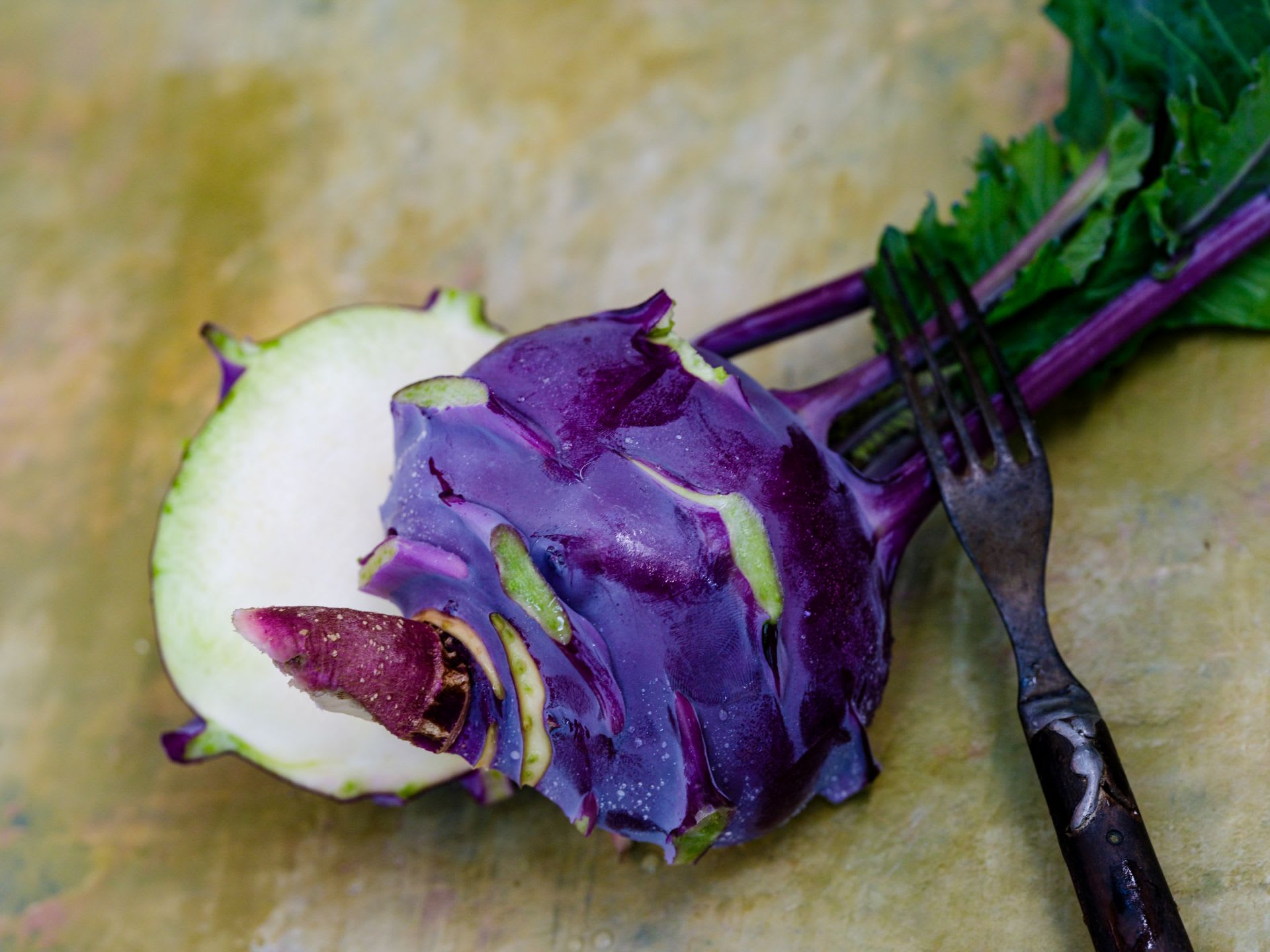
The kohlrabi group was further separated into “white” and “blauer.” The “blauer” sub-group has a purplish skin and some purple coloring on the stems and leaves.
The Vilmorin Andrieux seed catalog of 1883 mentions two purple kohlrabi varieties: Früher Blauer Wiener and Blauer Ulmer. At that time, “blauer” varieties were known for their early and fast autumn production and recommended for harvest small, lest they become fibrous and stringy. Because of their short growing cycle, they may be used for successive plantings.
The “Blauer Speck” variety was introduced for sale in 1914. It rapidly overtook older varieties throughout Central Europe and spread widely during the Second World War.
Its smaller leaf size made for compact, higher density planting. It was also less prone to cracking, and it stored much better than the older varieties. Some newer varieties later came into favor, including the “Dunkelblauer Wiener Speck” in Austria and the “Blauer Delly,” which Seed Savers Exchange acquired in the 1990s.
It’s likely that German immigrants brought kohlrabi seeds to Midwestern states such as Wisconsin when they began settling there in the mid-19th century.
But kohlrabi has also spread far beyond its European roots. In northern India, it’s a staple of the vegetarian diet. And it’s found a niche market on the Mediterranean island of Cyprus, where it’s known as kouloumpra.
How to Grow Kohlrabi
- Sow seeds indoors 4-6 weeks before last frost.
- Sow seeds ¼ inch deep.
- Seeds germinate in 6-9 days.
- Ideal germination temperature is 45-80 F.
- Set seedlings outside for two weeks before planting to harden off. For a fall crop, sow seeds 8-10 weeks before first frost.
- Kohlrabi needs full sunlight and fertile, well-drained soil.
- Inconsistent watering will cause cracking of the bulbous stems.
- Use drip irrigation to water evenly.
- Plants are shallow rooted, so avoid cultivating too closely to the plants.
- A thick layer of mulch will help to retain moisture and suppress weeds.
Kohlrabi stands up to disease and pests better than most other cabbage relatives. Still, fungus can be an issue, so be sure to rotate crops, provide good airflow, and avoid overhead irrigation. Cabbage loopers can be picked off by hand, or you can treat plants with Bt or with diatomaceous earth.
Key Takeaways
- Kohlrabi is a Brassica oleracea relative cultivated for its swollen stems.
- Kohlrabi gets its name from the German words for cabbage and turnip.
- It's thought that a monastery gardener in Germany began selecting for the swollen, bulbous stem of kohlrabi.
- Blauer Speck was introduced in 1914 and soon became a standard favorite kohlrabi variety.
- Outside its European range, kohlrabi is a favorite vegetable in India and on the island of Cyprus, where it is known as kouloumbra.
About the Author
Michelle Johnson is a nationally award-winning writer and editor with decades of experience in broadcast, print, and digital media. This piece from the archives was researched by the late Richard Bernard, a distinguished horticulturist and longtime colleague at Baker Creek.


