


Winter arrived with a fury at our Missouri homeplace the last week of January. We shivered and shoveled, and then we remembered – spring is just around the corner, and it is time to plan and start cool-season annual flowers indoors.
You can direct sow cool-season annuals, but giving your spring flowers like pansies and snapdragons, calendula and nasturtiums, sweet peas and dianthus a little head start will yield happy results. Larger plants, stronger stems, and longer bloom times result from coddling your seedlings indoors before sending them out into the big world.
Some of Our Favorite Cool Season Varieties
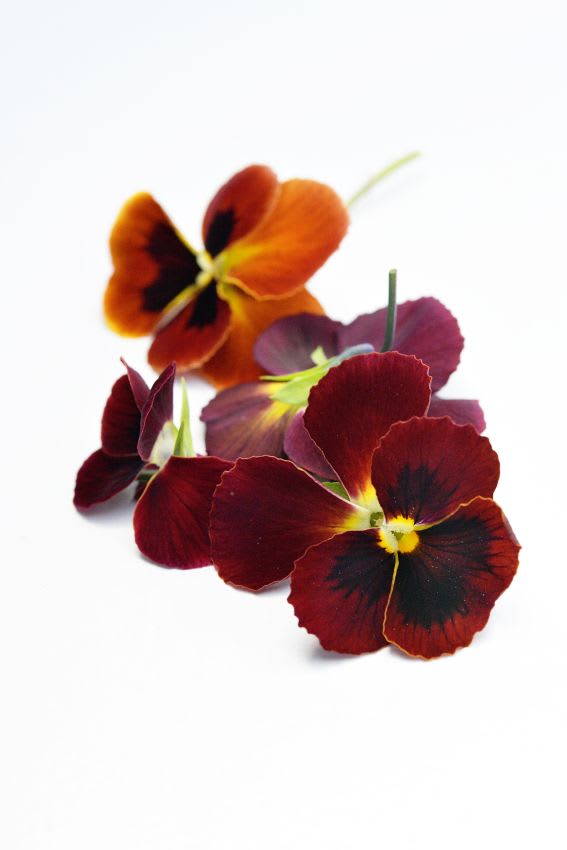
Pansies/Violas
Pansies and violas are chipper, cheerful little flowers, and they are also tough enough to tolerate low temperatures. Botanical name Viola x Wittrockiana, they are a 19th century English garden creation bred from Viola tricolor, a wild pansy commonly known as heartsease. Viola’s native range extends from much of Europe to western Siberia and northern Iran, and the petite, creeping wildflowers are a common sight of spring along riverbanks, in fields and meadows, and on rocky outcroppings. It has a long history of use in folk and herbal medicine as a tonic and treatment for epilepsy, skin diseases, and respiratory issues such as colds and asthma.
Pansies come in a panoply of colors, shapes, and sizes, including the luxurious Arkwright Ruby, the plucky Bunny Ears viola, and the elegant Brush Strokes viola. Pansies and violas can handle light frost and low temperatures in the mid 20s but are happiest with soil temperatures between 45 and 60 F and air temperatures between 40 and 60 F.
Start pansy and viola seeds indoors 10 to 12 weeks before your last frost date.
Read more about the history of pansies in our recent blog post.
Snapdragons
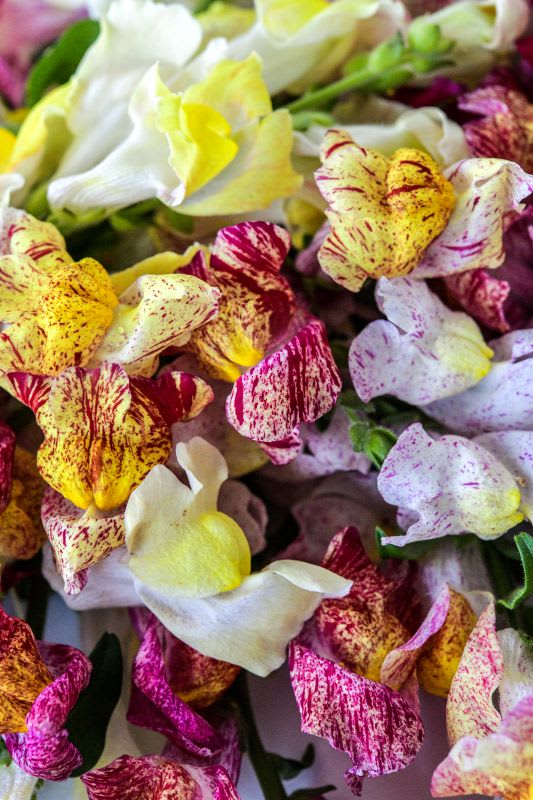
Snapdragons are native to the Mediterranean and southern Europe, and they have been cultivated since antiquity. The beak-shaped blooms inspired the name (Antirrhinum is Greek for “like” and “nose.”) Ancient Greeks and Romans believed that snapdragons had the ability to protect against witchcraft.
As a species, antirrhinum is genetically and morphologically diverse, a quality that has made them valuable research plants. In the 19th century, both Charles Darwin and Gregor Mendel used snapdragon in their studies of plant genetics and the inheritance of various characteristics. In the early 20th century, German geneticist Erwin Baur used it to help understand how genes contribute to flower patterning and color.
It’s not necessary to understand the science to appreciate snapdragons’ phenomenal color, range, and utility; with varieties such as the fabulous and funky Bizarre Mixed to the brooding, dramatic Black Prince, is it any wonder that snapdragons are a favorite of florists around the world? And they’re edible to boot!
Start snapdragon seeds for transplant eight to 12 weeks before your last frost date.
Snapdragons are cold hardy; they can handle light frost and temperatures in the mid 20s, but they do best with a daytime air temperature between 60 and 70 F and soil temps between 65 and 75 F.
Calendula
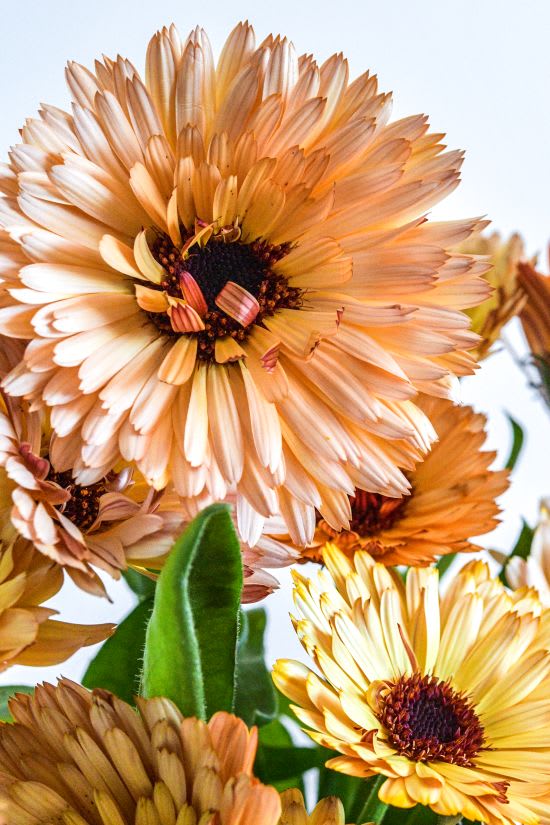
Calendulas (aka ‘pot marigolds’) have surged in contemporary flower garden design, with the development of new colors and forms, but they are incredibly important in cultural history, says food historian William Woys Weaver.
The ancient Greeks and Romans greatly valued the oily flowers of this Mediterranean native for medicinal applications. Today their anti-microbial properties have earned them a permanent spot in homeopathic and natural medicine, especially in topical treatments like salves and ointments.
But Weaver points out that we shouldn’t overlook calendula's culinary potential; the young buds, full flowers, and even petals can be used for adding flavor, color, nutrition, and spice to dishes. The buds can even be pickled. It is no wonder that calendula is sometimes called “poor man’s saffron!” It also has natural pest-repelling properties for the garden and is often used in companion planting.
Whether you are looking for bright orange flower power like Orange King, with its massive double blooms, or something more understated, like Strawberry Blonde, the plants and the pollinators will thank you for calendula!
Start calendula seeds indoors three to four weeks before the average last frost date in your region. The plants do best in soil temperatures ranging from 60 to 70 F and air temperatures between 65 and 75 F. Calendula is cold hardy and can tolerate temperatures in the mid 20s.
Stock
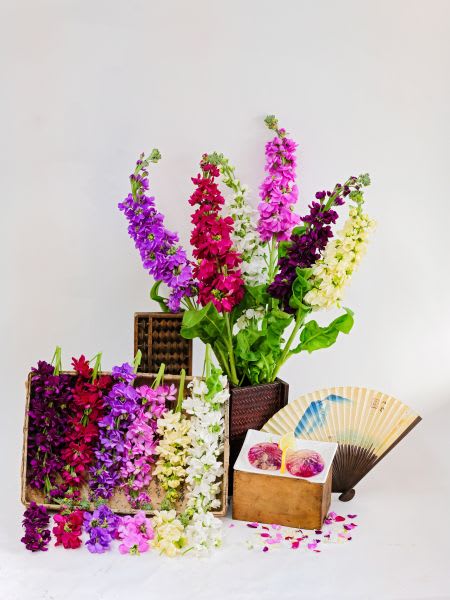
Stock is native to the Mediterranean coast and still grows wild along seaside cliffs and stone walls. Its intoxicating clove-like scent earned it the nickname “gillyflower,” invoking the French vernacular word for cloves.
Englishman John Gerard and other herbalists obsessed over stock flowers in the 1500s, so smitten were they by the flowers’ incredible fragrance and beauty.
But nowhere has stock found as firm a foothold as in Japan, and Baker Creek is pleased to offer many wonderful varieties from Murakami Seed Company in Japan.
Did we mention that stock is a member of the Brassica family and that its colorful blooms are edible and delicious, with a snappy flavor a bit like radish?
Fall in love with stock!
In warm climates, stock grows as a perennial, but in most places, including Japan, it is grown as an annual. Start stock seeds indoors six to eight weeks before last frost. Stock is cold hardy to about 30 F. It prefers air temperatures ranging from 50 – 75 F and soil temps between 60 and 70 F.
Read more about the history of stock flower in our blog post "Stock Flower: The Glamorous Brassica."
Nasturtium
Nasturtium (Tropaeolum majus) is native to Central and South America, where it was prized as both a salad herb and a medicinal one.
Spanish conquistadors took it to Europe in the 16th century, where it was introduced as a food plant. In his 1597 Herball, or Generall Historie of Plantes, English herbalist John Gerard writes of receiving nasturtium seeds from Europe; it is quite possible that Gerard also coined the term “Indian cress” to describe nasturtium, for its spicy resemblance to watercress.
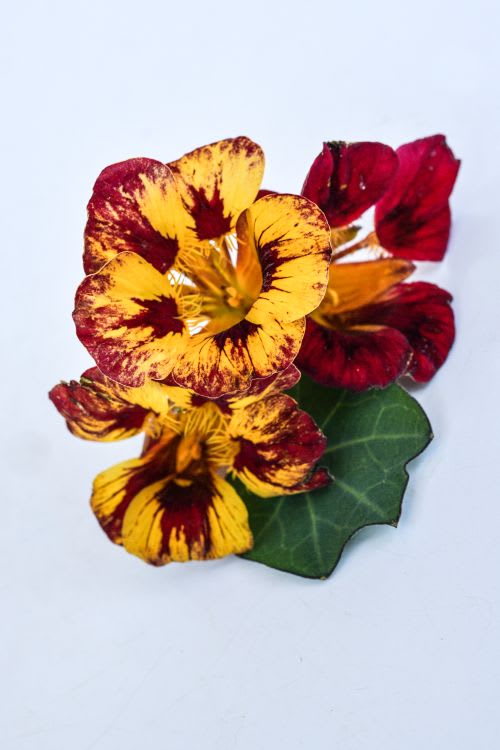
Nasturtium is one of our favorite edible ornamentals (or should we say ornamental edibles?) for its wide array of bloom colors, patterns, and sizes. The blooms and the leaves are edible, and pickled, the seed pods make an incredible stand-in for capers.
Nasturtiums do best when daytime temperatures range between 60 and 75 F and soil temperatures of 55 to 65 F. They will tolerate a bit of frost, but much prefer nighttime temps of 50 F or above. Nasturtiums will do just fine in poor to average soil.
Baker Creek offers a range of nasturtiums to fit most any garden color palette, from the splashy Golden Jewel to the fiery little Orchid Flame, which grows just a foot tall.
How to Start Cool Weather Flowers Indoors
Knowing when to start seeds indoors starts with knowing your last average frost date. The National Gardening Association offers this handy online tool where you can look up frost dates using your zip code.
Most cool-weather annuals should be started six to 10 weeks before the last frost. They prefer cooler soil and air temperatures and can even withstand some frost.
Follow best practices for seed starting:
Start Fresh
Use fresh, sterile seed starting mix – not garden soil – that's fine, fluffy and well-draining. Wet the seed mix before seeding – but not too much! You want it to be damp like a wrung-out sponge, not sopping wet. Tamp down the seed starting mix to remove any big pockets of air, but don’t pack it down. Those tiny roots need to be snug but don’t want to struggle.
Mind the Seed Size
The size of the seed helps determine the depth at which to plant. Follow the seed pack guidelines, but generally seeds should be planted at a depth about two to three times their diameter. Very small seeds such as snapdragons often need light to germinate and should be surface sown and lightly pressed into the seed starting mix but not covered.
Mind the Temps
Many cool-season flowers germinate best in moderate temperatures (between 60 and 70 F), so you can probably skip the heat mat if you’re starting indoors. (Heat will do them more harm than good.) After germination, grow seedlings slightly cooler — around 55–65°F — to promote compact, sturdy growth and prevent legginess.
Give Seeds Good Light
Strong light early is key to strong seedlings. Rather than depend on windowsills in late winter, use full-spectrum grow lights positioned two to three inches above the surface, and later the foliage. Adjust the lights upward as the plants grow to avoid damaging the seedlings. Run the grow lights 14 to 16 hours per day.
Manage Water and Airflow to Seedlings
Water from the bottom whenever possible by placing the seed cells in shallow trays rather than watering from the top. The soil surface should be slightly dry between waterings and never be constantly wet. Consider running a small fan on low power to encourage air circulation. This helps prevent fungal infections and promote stronger stems.
Feed the Seeds, but Not Too Much
Soil nutrition is an important part of raising a healthy, successful crop of garden seedlings. At Baker Creek, we use a Royal Gold soil blend with a light nutrient charge. Seeds don’t require fertilizer until they begin forming true leaves. We use locally sourced worm castings from which we make a tea, and then a water soluble, organically balanced NPK fertilizer. We have also used fish emulsion. Whatever fertilizer you choose, use a light hand by diluting it to one-quarter strength, and make sure to follow the manufacturer's recommendations. You can always add, but you can’t subtract!
Acclimate Your Seedlings to the Outdoors
About two weeks before transplanting outdoors, begin exposing your seedlings to outdoor conditions, choosing a place with limited exposure to sun. Bring them inside at night. Give them a little more sun outdoors each day until you’re ready to get them in the ground. Cool-season flowers can usually be transplanted before the last frost, once they are acclimated.
Read more about seed starting from the Baker Creek experts!
And check out some of our experts’ go-to resources on gardening!
Key Takeaways
- While cool-season annual flowers can be seeded directly in the garden, starting seeds indoors gives plants a head start.
- Varieties like pansies and violas, calendula, nasturtium, and stock prefer cool weather.
- Starting cool-weather annual flowers indoors is very similar to starting other types of plants. They probably won't need a heat mat, but they will need good, strong light!
About the Author
Michelle Johnson is a nationally award-winning writer and editor with decades of experience in print, digital, and broadcast media.
She is also Baker Creek's resident 'seed historian,' digging into the back stories of celebrated and fascinating heirloom varieties from around the world.
Explore her Seed Stories video project on Baker Creek's YouTube channel.


